
A Welcome Back & Goodbye?
In the words of Shrek, it’s quiet, too quiet. That’s been this blog for a while now.
There are many reasons why and much like the Voight-Kampf test, time is a factor. I simply haven’t had enough of it recently. However, more pressing is a lack of interest in Wargaming. See, I’ve made, converted and painted plenty in the interim time, but I’ve not felt excited enough to play. The magic has gone from it for me, and whilst this has been fleeting in the past, this is the first time I’ve considered selling my Titans to pay to fund a different hobby – mainly photography to upgrade my ageing Sony A1 Mark 1 and a few lenses.
That’s what has really triggered this introspective – why do I feel that this “might be it” for me, despite going through rough patches before?
The Loss Of Narrative
I started playing in 8th Edition, so lets get the pitchforks out, light the rags on sticks and come after me for a minute. Yes I’m not a Warhammer sweat who has been playing since dice were made from the bones of animals and miniatures were converted from wattle and daub. I did read the books prior to playing and also loved Dawn of War when it first released on PC.
8th was an interesting moment for me. I was playing every other night at my then-local store, 4TK Gaming, with a really good group of friends – many of which are still in regular communication with and we play games when we can. I started off with Black Legion, expanded to World Eaters, then switched to Adeptus Mechanicus before selling virtually everything and going to Night Lords and Aeldari. Why Aeldari? The Wraiths – they’ve got such cool lore and look fantastic. They have never been wonderful on the table for me, but I love the Iyanden and Mymeara schemes that my Wraithhost have spent a considerable period of their lives in, and lets not forget my custom Craftworld that I created using the Custom Craftworld tool set “The Midnight Whisper”. If I recall, they favoured the use of Warp Hunters over Fire Prisms due to “preferring to unleash devastation through surprise, over announcing themselves with a piercing shriek”. It was 8th that really got me excited for Warhammer, and Forgeworld models. I have more Shadow Spectres, Warp Hunters and other really cool Forgeworld models that are basically unplayable these days than I care to discuss.
However, after playing my first competitive event “CoG Doubles @4TK Gaming” and being absolutely ruined, I realised something was occurring within most of the Warhammer 40,000 communities. As gamers came up with powerful new combinations, or outright broken armies, the communities would start to take up that design of list in part or in full. This wasn’t a local phenomenon, but virtually everywhere I was playing (which was in the South East, South West and North West). A slow, pervasive mental shift from armies that were built around a narrative theme to armies that were built to deliver specific devastation to an opponent, with a flimsy narrative wrapped around them. It was also about this time that I realised how massively competitive the US side of things was and how rapidly that seemed to be consuming them as a community. You would see it in forums, Discord and other social platforms most clearly – throughout the European day it was quite narrative, with some competitive thrown in (there’s always That Guy). However when “American-O’Clock” came around, that quickly flipped with people talking primarily in terms of efficacy, viability and in tiers. Words like “garbage” and a lot of negativity being thrown around for a unit choice that didn’t perform on an equal footing.
The problem with wildfires is they grow rapidly, consuming more and more of the environment they inhabit and become the focus for all in the region. This is what I believe happened to Wargaming mid-to-late 8th Edition to become the dominant feature of Warhammer 40,000 to date. Games Workshop, seeing the literal dollar signs seem to have agreed with this, setting up major distribution in the US for then Forgeworld and Games Workshop products. It’s then we start to see the competitive side really take hold – with big money involved. Events being showcased as if they’re NFL games, with big American accents over-excitedly over-pronouncing, normally wearing American football-style, Warhammer themed shirts and arbitrarily declaring units “trash” or “god tier” with little to no expansion. This crossed “the Pond” leading to the rise in popularity of channels like TableTop Tactics and SN BattleReports, who effectively ran purely competitive lists in a loose guise of a narrative story. Thus, with their outreach on YouTube growing, it became a self-perpetuating wildfire in the UK too. It is indeed this time where I began to run into a huge amount of “That guys” that just became the status quo. Games Workshop seized the opportunity by invalidating units viability on a regular basis, causing people to have to go and buy the latest craze, because otherwise they’d be obliterated by the other players doing it. It was like a cancer – but it was too late to do anything about it as the body was already riddled, and worst of all, the brain supported its growth.
It was at this time that I wholeheartedly switched to Horus Heresy. I’d been building a Night Lords army from Forgeworld models and had a Burning of Prospero box set that had helped with this. However I’d been doubling up my games, with the odd Heresy game, but focusing largely on Warhammer 40,000 as my primary system. The Aeldari went into a box, only to ever come out once or twice in an edition to confirm I’d made the right choice to switch to the Horus Heresy.
1st Edition Horus Heresy was amazing. Armies had rules that made them feel significantly different from each other, Legions rules were outstanding as they really shaped them to the lore. Virtually all of the choices in the book were “viable” and that led to really interesting armies on the tabletop. Events were really fun, with game results driving narratives that evolved throughout the weekend. Alan Bligh had passed, but the game system lived through the community and the rules team, though they clearly lacked the drive and imagination of Bligh were doing something with the game, however infrequently. I distinctly remember hearing phrases like “Heresy is dead” from groups and channels who now purport to be its biggest fan. Book 9 Crusade was my last big purchase of 1st Edition, and the last hurrah was played at Warhammer World on Jmigen Bridge by our group. It was great.
2nd Edition was a turd in the mouth. I stopped playing for a significant amount of time in 2nd, because when I put my lovingly crafted 1st Edition Night Lords down on the table, people sighed as if the game was a done deal. It wasn’t and I lost as many games as I won. The attitude people had ruined the game for me. A lot of the narrative seemed to start to be bled away during this Edition and it showed a clear change in the rules team direction for Horus Heresy. Inbuilt “gotcha” moments in the form of reactions that seemed ill-conceived (such as returning fire at full BS) made the game mostly about trading up, and the only real difference in army construction was the colour of the armies due to the huge gulf between the very efficient Contemptors, Heavy Support Squads and the likes and the rest of the books. It’s here again that a shift in the communities occurred, with the first Horus Heresy Competitive only groups appearing in social platforms, largely driven by accessibility – things started to go plastic and that expanded the games reach to the Warhammer 40,000 community.
Gatekeeping is a loaded phrase. Like most things, it’s entirely dependent on how its implemented that determines its outcomes. Pricing people out of a system is not the right form of gatekeeping and as a result the move to plastics was a decidedly good thing – I don’t think anyone argues that. It encourages gaming system tourism, which is good for the game and good for Games Workshop. It can be good for the community too, as it allows new players to effectively conduct a bit of disruptive innovation in the system and challenge established meta. Note that I’m not talking about a meta, but the general status quo as meta. Unchecked tourism however, can lead very much to what had already occurred in Warhammer 40,000 at the end of 8th edition – a pervasive mindset at crossed purposes to the well established gaming system principles. THIS we should have been gatekeeping in the main, but it wasn’t, because around this time people were being hung out to dry and Games Workshop released their “You shall not be missed” statement that was wholly unrelated to Horus Heresy gaming principles, but people capitalised on it and twisted its meaning of inclusiveness to effectively support the subversion of a narrative-first style into a competitive-focused one. A bit like how a modern argument when someone doesn’t agree with a specific principle is labelled a fascist. 90% of the time they aren’t, they’re just trying to get people to realise that when you’re a tourist, you need to respect customs and cultures of places you’re visiting. Something else the Americans can’t really do in the main (yes some of you are good – but there’s a reason you have the stereotype). Tourist or Tourism is now banned as as phrase in some communities now, as a further point of silencing anyone generally calling out bad behaviour.
Because we didn’t protect the principle nature of Horus Heresy when it mattered, those who came from Warhammer 40,000 brought with them the problems they were running from in that system. Because we didn’t want to waste time playing games, we then followed suit as a community and became competitive by nature. How else do you explain the clear and present meta in not only 2nd Edition, but also 3rd Edition? It’s not just an evolution of the game. It’s cultural.
3rd Edition is the death of hope for me. Somehow the rules writers, having realised how badly they mauled the game in 2nd Edition, made it less narrative overall in 3rd, and preserved the gulf between efficient units and the rest of the book units. Sure, there are some stand outs – such as the Night Lords, who as a Legion have some amazingly good narrative rules. However, most armies are defined by one rule and their colour scheme their Laser Destroyer Vindicators, Spartans/Land Raiders and Terminators are painted in. The missions were boring, the turn reduction focused people on immediate rewards and therefore the most competitive units. We saw the first “Horus Heresy Tournament” run by SN Battle Reports, effectively shrugging off the thin veneer of “narrative” and we saw the first “Best Heresy Player” award. Do we as a community really care who scored the most points? Or do we care about what side completed their narrative objectives in a weekend and therefore won?s
It’s a slippery slope – as we saw with 8th Edition in to 9th Edition and onwards.
Rules! Terrible Rules!
Rules writers have a hard job. They can’t please everyone and have to evolve a game in an already established community to meet both that communities ideals and the corporate side too. They chose to simplify the rules and model ranges to make it more approachable, and have less rules lawyering. Conversions based units were out and so were those that didn’t have “models in production”. Except that meant quite a lot of units that still did. There was community uproar, and rightfully so.
The rule books are a masterclass in ineptitude too. Simplification of rules means that most of them now have sentence structure and content that would make Dan “Siege of Terra Word Count” Abnett blush. Most of them seem to refer to rules in either different sections (but no direct linkage – turn to page 128) or even different books, it’s actually more complicated. Weapons rules are at the back of the book, except when they aren’t and they’re in the profile of the unit or in another book.
I’ve seen people working through a chain of rules and actively say “fuck this, I’m just going to do X instead”. Anyone in the rules team thinking they’ve done really well should take a long walk down a short beach into the deep sea. This is the WORST Edition for rules. Night Fighting in 1st Edition was an interesting narrative twist. The rules team absolutely fucked it up in 2nd Edition, where 90% of games were fought at night for no real reason. The best way of fixing it in 3rd Edition? Clearly it was too hard to implement so it was outright scrapped. Better yet, its the WORST Edition for do as I say, not as I do. Line and Vanguard are also perfect examples of terrible rules writing. Sometimes, looking at an opponent and the mission you simply can never win, unless you roll perfectly every turn. This is especially prevalent with Astartes vs Mech games. Vanguard can simply be nullified by using a reaction.
SO that discussion with Games Workshop where they said “you can build your armies in new and interesting ways”… Well, you can’t really can you – you either end up with a tonne of points in HQs to still get wrecked on the table due to core missions and rules being terrible for scoring, or the community buys them out by making rules for events that actually make sense. Finally, the missions themselves are by and large meaningless. They don’t link, they don’t have any real outcome outside of a purely competitive sense (score more VP to win) and are biased to whoever brings the most Line. My group has created random draw cards to try to offset the shit missions. They work really well and every game is fun and different from each other, with everything from planetary effects to primary and secondary mission variance. It stemmed from me missing 8th Edition cards and how much chaos and fun they caused, and resulted in two blokes writing rules (Andrew more than I) and then some testing with the wider team. If we can do that, why can’t the rules team, who are paid to do this?
Not content with writing the worst rule books, Games Workshop is now releasing Journals. Many of these contain units that cannot be purchased outright – something that was used as a reason to retire a tonne of units before the complaints. Welcome to Warhammer 40,000 the Horus Heresy years. You need a tonne of books to play the game now, and you’re locked into £20 releases of really thin books for one or two units.
Sometimes, having people in a role for a long time is a good thing. When that’s their only focus and they’re a really imaginative individual who can blend the community/game/corporate needs that’s great. When they lack the drive, imagination, or even the ability to self-reflect and say “Night Fighting was best implemented in 1st, lets re-implement that on a limited basis in the core rules and see how that goes – as we clearly aren’t good enough to make it work otherwise” they’re not good. Worst still, if that person is a leader within the overall team, then that leads to drift and bad implementations.
We are now firmly in a competitive Horus Heresy worldview. There are several rules writers that for better or worse would stick their head above the parapet in 1st and defend their work or discuss intent etc. Nowadays, it’s radio silence, verging on contempt between releases and AI-like useless responses from Warhammer Community.
How is this measured? Through divisiveness. A new store opened in my hometown the other week, Tokyo Toys. I visited to see what it had in terms of gaming space to find a pair playing Horus Heresy. 1st Edition. When I asked how comes they were playing 1st and not 3rd, they replied “It’s competitive shit”. Now look across the community you reside in. Look at the player base and see how many “no longer play” (they probably are, but not with you), or have outwardly gone back to 1st or even stayed on 2nd Edition. There are a tonne of players doing this, and it is getting worse, slowly but surely the longer the competitive and poor rules rot sets in.
But it doesn’t matter because Games Workshop is making a lot of money, whilst simultaneously repeating the same mistakes they made with Warhammer 40,000 (pandering to the competitive American and UK side) and killing it off slowly but surely. A game system that by and large only exists because people in the community, not the Company, kept it alive whilst the Rules team recovered from the loss of the games visionary.
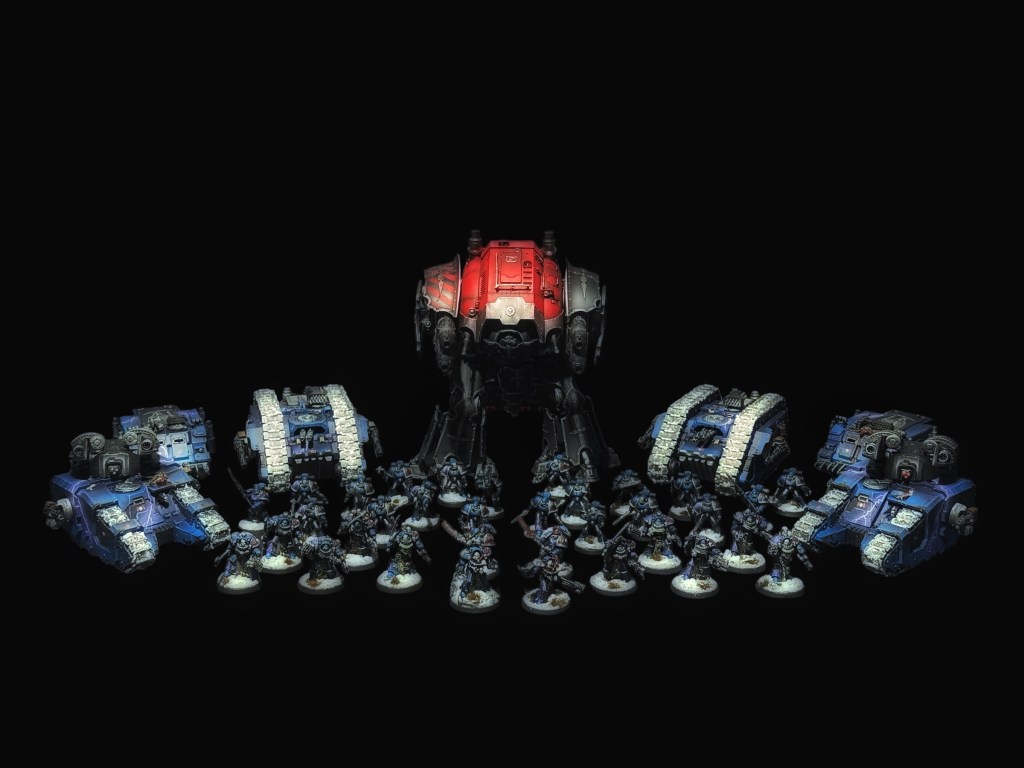
Lies, Glorious Lies
This post came about with the announcement of 11th Edition of Warhammer 40,000. Games Workshop said they are focusing on narrative rules and game style in one breath, then on a preview were talking efficiency, tiers and competitiveness the next. Honestly, the ship has sailed for both systems now. They’re driven by competitive players, who drive sales of books and units.
My advice? You have three options;
- Convert. Become a competitive player and punish your opponent who stupidly believed it was a narrative-first game you were playing! Make them cry or rage quit if you can! It makes you more superior!
- Gatekeep. Find those who still believe that the story is better when you’re both adding to it instead of merely “winning a game”. Build those communities up, and protect them. Let the spirit of the game that we all loved in 1st Edition come to the fore.
- Go. Remember “You will not be missed”. You’re a fascist. Scum. Get with the times old man. We don’t need stories being told and player engagement, we need chess, but more expensive!
Warhammer is a shitshow that is like a tide of fecal matter that’s on fire – you don’t want to watch as it impacts the things you love, contaminating them and consuming them. The rules team for Heresy are pretty poor (that’s being polite). The rules team for Warhammer 40,000 are liars. The American scene is largely to blame for the absolute atrocity that saw tourists come over from Warhammer 40,000 and fuck up Heresy, the same as happened in Warhammer 40,000. The Heresy community just didn’t police itself well and call out dickheads. Still doesn’t. Then there’s Games Workshop, operating as the most American company in Europe and giving zero-fucks. It’s a neat 33% split between everyone involved but we are all responsible for the situation we find ourselves in.
I Love Good Games, Despise Landslides
I really enjoy a game built up and played well that is enjoyed by both players. The score doesn’t matter, its about the story that’s been told. Why are the Iron Warriors and Night Lords facing down, and what’s at stake? What pivotal moments occurred during the game and the impact to the narrative. This doesn’t mean the players aren’t playing their armies well – most of the people I know and play with are very adept at playing their armies extremely well and on an even keel would rival or beat competitive players. Playing well and playing narratively aren’t separate entities, but playing the games well in a narrative mindset and the competitive mindset is. It’s a level above where the narrative isn’t the focus, but the combos, interactions and the pure outputs and efficiency behind them are. Competitive cares less about the other player in the social contract and more about the win.
There are some small groups who still play like it’s 1st Edition. I’m just not sure there’s enough of us playing who can challenge clearly enough to offset the bullshit. It’s hard running a narrative event, or campaign – requires list management alongside the event or campaign itself. The best way of doing the list management side is simply to build the lists side by side with your opponent. Then you can check and balance live. The best thing this community can do is become active. The Honest Heresy channel on YouTube is quite well balanced in terms of narrative play and performance and there are many more out there, give them a follow, promote them ahead of the more competitive ones. When it comes to events, give people two chances to produce a narrative army, then refund them. Don’t have an award for Best player (who got the best score for traitor and loyalist over the weekend), have a narrative-based award (such as best Legion theme) or best sport. Have a diversity award for the most diverse or narrative army lists. Be the light in the darkness and don’t encourage people making a list that simply scores through Line and destruction. That shouldn’t be the outcome, the narrative should.
There was a player who played against a friend of mine at an event. Jump Squads in Land Raiders and 9 Laser Destroyer Rapiers. The list was quite frankly bullshit. Why the hell are jump troops inside Land Raiders? Why do you have so much Anti tank? They were called out and it was made clear why is was bullshit by their opponent and forced to play against the TO/EO for the event because other people similarly refused to play them. They turned up at another event with the same list two weeks later. These sort of people simply won’t learn until they cannot play anywhere.
My last event was narrative in nature and identified as such. Most of the players were talking about taking one LoW or centrepiece unit. I decided on the Falchion, noting that although it was a strong choice it didn’t really have a wider impact other than the one unit it was targeting and I’m good at rolling ones… Game one versus Knights – two Acastus Class, as Porphyrion and Asterius, alongside two Questoris Melta Knights and two Dracosan with Solar inside. Turn One they killed my Falchion, two Land Raiders, two Rhino and an Arcus. I did one wound of damage in return. Turn Two the game was done, killing my last Arcus and two Rhinos. My opponent had the audacity to tell me he was going to heal the wound I’d done – just proving that competitive players like that have no social skills, or humility. They simply did not care that I’d paid to come to a narrative event and spent less that twenty minutes playing the first game. They didn’t care about the miserable experience that was, because they were superior to me – because they won. They didn’t care or understand how arrogant they were when they stated they were “going to shoot and kill this, this, this” time and time again. They’d done the maths, they’d abused the listbuilding to bring a massively competitive army to a fully narrative event and they wanted to clean up and “Win”. Their team wouldn’t win through destruction alone, beacuse they had failed to understand the event pack, so their arrogance, superiority and high levels of cunt were wasted. Every game they played post that was a similar misery-fest for their opposition. When I explained how cuntish their list was, they stared blankly at me as if I didn’t know the game I was playing. I started in 1st Edition, they started at the end of 2nd Edition and had come from the tournament scene of Warhammer 40,000.
Short Beach.
Deep Sea.
I’m tired boss…


Leave a Reply